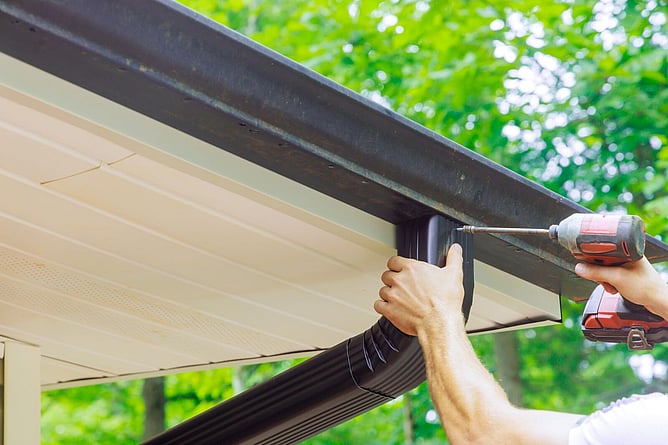
When people think about spouting, they often focus on colour or profile first. In Kerikeri and the wider Bay of Islands, the climate should come much earlier. Heavy rain, humidity, wind, and coastal salt all change how well a system performs over time.
At Flood Roofing, we install and replace spouting across Kerikeri, Paihia, Kawakawa, Kaikohe, and Ōkaihau. That means we often see the same pattern. A system that looks fine on day one can struggle if it is undersized, poorly joined, or not suited to local conditions.
Heavy rain exposes weak points fast
Northland downpours can test every part of a drainage system. When spouting cannot move the volume of water quickly enough, it overflows. That can lead to you having wet cladding, soggy ground, and the potential of damage around the base of the home.
This is why capacity matters as much as appearance. Wider profiles, correct falls, and sensible downpipe spacing all help. If one part is wrong, the whole system works harder.
Older sectional spouting can really struggle here. Every join is a potential weak point over time, and sealants age, so movement happens, and leaks often start where these sections meet.
Humidity and tree cover create a maintenance problem
Kerikeri properties often have more vegetation than urban homes further south. Trees are great for shade and privacy, but they also fill gutters with leaves. In humid weather, that debris stays wet for longer and breaks down faster.
That creates two issues. First, the spouting clogs more easily. Second, trapped moisture encourages the growth of mould, algae, and corrosion, especially when maintenance is delayed.
This is common around established homes in Kerikeri and lifestyle blocks near Ōkaihau or Kaikohe. A property may not need a full replacement yet. It may simply need better flow, better outlets, or a cleaner design with fewer joins.
Coastal air changes the material conversation
Homes closer to Paihia and other coastal parts of the Bay of Islands face another issue. Salt sits on metal surfaces and speeds up corrosion. Even a good-looking system can wear out faster near the coast if the material or finish is not right.
That is why material choice matters. It is also why regular washing and inspection matter. Spouting is not just there to catch rain. It is part of the building envelope, and it protects fascia, cladding, and foundations.
For coastal homes, we usually look at durability first. Colour and style still matter, but they come after performance.
Why continuous spouting often makes sense
For many Northland homes, fewer joins is a practical advantage. Continuous systems reduce the number of connection points where leaks can start. They also tend to give a cleaner finish, which matters on both older homes and new builds.
This is not just a Northland trend. You can see the same thinking in other regions, too. Fine Line’s page on continuous spouting in Hamilton is one example of how seamless systems are discussed for long runs, fewer joins, and better overflow control in a different local market.
That does not mean every property needs the same setup. A compact home in town may need something different from a large rural roof. The point is to match the system to the site, not just the brochure.
Three local examples
A coastal home in Paihia may need extra attention to corrosion resistance and structural integrity. Wind-driven rain and salt both increase wear. In that case, durable materials and regular checks become more important.
A family home in Kerikeri under mature trees may have a different problem. The main risk is blockage and overflow. That home may benefit from cleaner lines, better downpipe placement, and a maintenance plan that suits the site.
While a rural property near Kaikohe may have long roof runs and larger collection areas. There, sizing becomes critical. If the spouting or downpipes are too small, heavy rain will quickly find the weak point.
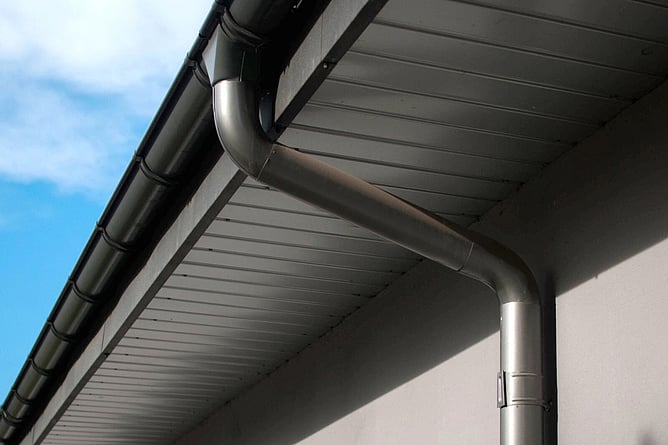
What homeowners should check before choosing new spouting
Start with the roof area and the amount of water it needs to carry. Then look at your exposure. Is the home close to the coast, under trees, or open to strong weather?
Next, check the fascia condition. New spouting installed onto tired timber can create problems later. A good replacement plan considers the entire edge of the roof, not just the gutter profile.
Finally, think about maintenance. Some systems look tidy but are awkward to clean. Others are easier to live with over the long term.
The best choice is the one that fits your property
Good spouting should suit the climate, the roof design, and the way you use the property. In Kerikeri and the Bay of Islands, that means planning for rain, humidity, wind, and salt from the start.
When those factors are considered early, the system lasts longer and performs better. That is usually the difference between a quick upgrade and a smart one.