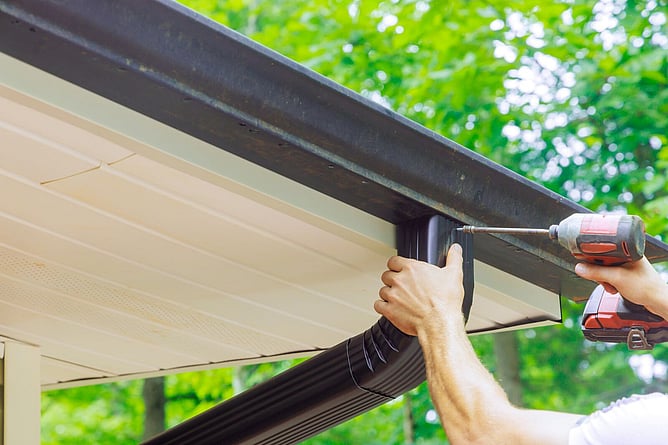
When people choose new spouting, they often start with the colour, profile, or how tidy it will look from the street. Those things matter, but in Kerikeri and the wider Bay of Islands, climate should come first.
Our homes deal with heavy rain, humid conditions, leaf build-up, coastal air, and sudden weather changes. That means spouting has to do more than look good. It needs to move water quickly, resist wear, suit the roof design, and protect the home from moisture damage over time.
At Flood Roofing, we install and replace spouting across Kerikeri, Paihia, Kawakawa, Kaikohe, Ōkaihau, and the wider Bay of Islands. We see the same problems often. A gutter system may look fine when it is first installed, but if it is undersized, poorly joined, badly positioned, or not suited to local conditions, Kerikeri weather will usually expose the weak points.
Why Kerikeri Homes Need Climate-Suited Spouting
Kerikeri’s climate puts more pressure on spouting than many homeowners realise. Rainfall, humidity, tree cover, and coastal exposure all affect how well a gutter system performs.
Northland has a mild, humid, and rather windy climate, with plenty of rainfall across the year. The region can experience high-intensity rainfall from tropical or subtropical storms, especially between November and April.
For homeowners, that means the spouting system needs to be chosen for real site conditions, not just appearance. A house under mature trees in Kerikeri may have different needs from a coastal home in Paihia or a rural property near Kaikohe with long roof runs and large collection areas.
Good spouting should collect rainwater cleanly, carry it away from the roofline, and direct it into the right drainage path. If it cannot do that, the issue can move from a small overflow problem to damp fascia, stained cladding, soggy ground, or water sitting too close to the foundations.
Heavy Rain Means Capacity Matters
Heavy rain is one of the biggest tests for any spouting system. If gutters and downpipes cannot move enough water quickly enough, the water has to go somewhere. That usually means overflow, leaks, splashback, or water spilling over the front edge of the gutter.
In Kerikeri and the Bay of Islands, capacity should be one of the first things considered. That includes the roof area, roof pitch, gutter profile, outlet size, downpipe size, and downpipe placement.
A small gutter profile may look tidy, but it may not be right for a large roof area or a long run with limited downpipes. The same applies to downpipes. If they are too small, too few, badly positioned, or blocked, the gutter can still overflow even if the spouting itself is in reasonable condition.
For homeowners comparing options, we recommend looking at spouting installation and replacement in Kerikeri and the Bay of Islands as a performance decision first, then choosing the colour and profile once the right system has been worked out.
Humidity and Tree Cover Create Maintenance Problems
Many Kerikeri properties have established trees, bush nearby, or garden planting close to the house. That is part of what makes the area a great place to live, but it can be hard on spouting.
Leaves, twigs, moss, and seed pods can collect in gutters quickly. In humid weather, that debris often stays damp for longer. Over time, it breaks down into sludge, blocks outlets, holds moisture against the gutter, and slows water flow during rain.
Once water starts sitting in the system, other problems can follow. The spouting may sag, overflow, leak at joins, or put extra pressure on brackets and fascia. Damp organic material can also encourage mould, algae, and corrosion, especially if the gutter is older or already worn.
This is common on family homes in Kerikeri, lifestyle blocks around Ōkaihau and Kaikohe, and shaded properties where gutters do not dry out quickly. In some cases, a full replacement may not be needed. The better solution may be improved falls, better downpipe placement, larger outlets, or a cleaner spouting design that is easier to maintain.
Coastal Air Changes the Material Conversation
Homes closer to Paihia, Opua, Russell, Waitangi, and other coastal parts of the Bay of Islands face another challenge: salt air.
Salt carried in the air can settle on roofing, flashings, fixings, gutters, and downpipes. Over time, it can speed up corrosion, especially where coatings are scratched, joins are weak, or the system is not cleaned regularly.
That is why material choice matters. A spouting option that works well on a sheltered inland property may not be the best choice for a home exposed to coastal air and wind-driven rain.
For coastal homes, we usually look at durability before style. Colour still matters, but it should come after the practical questions: will the material suit the exposure, will the finish hold up, are the fixings appropriate, and will the system be easy enough to maintain?
Salt air, humidity, strong sun, and wind-driven rain can all work away at roofing materials over time, and the same conditions can affect spouting, gutters, fasteners, and flashings.
Fewer Joins Can Mean Fewer Weak Points
Older sectional spouting often struggles because every join is a potential weak point. Sealants age, materials move, and small leaks can start where sections meet.
For many Northland homes, fewer joins can be a practical advantage. A cleaner, more continuous spouting layout can reduce the number of places where leaks are likely to form. It can also give the roofline a tidier finish, which matters for both older homes and newer builds.
That does not mean every house needs the same setup. A compact home in town may need a different system from a long rural roofline, a coastal bach, or a commercial building. The aim is to match the spouting to the roof design, site exposure, and rainfall load.
When we assess a property, we look at how water will move across the roof, where it will enter the gutter, how quickly it needs to drain, and where the downpipes should take it next. That gives a much better result than choosing a product from a brochure without considering the site.
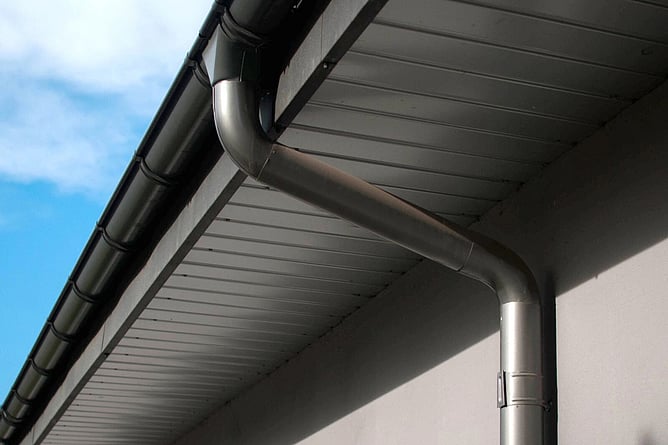
Fascia Condition Matters Before New Spouting Goes On
New spouting is only as reliable as the structure it is fixed to. If the fascia is tired, damp, rotten, uneven, or pulling away, installing new gutters over the top can hide the real problem rather than solve it.
Before replacing spouting, it is worth checking the roof edge properly. Look for peeling paint, soft timber, staining, sagging sections, loose brackets, or water marks around joins and corners. These signs can suggest the old system has been leaking or overflowing for a while.
A good replacement plan should consider the full roof edge, not just the gutter profile. That includes fascia condition, bracket placement, gutter fall, outlet positions, downpipe layout, and how water leaves the property once it reaches the ground.
This is also why roofing and drainage sometimes overlap. Roofing is responsible for collecting and diverting rainwater off the house, while drainage becomes important once that water reaches the ground.
Three Local Examples
A coastal home in Paihia may need extra attention to corrosion resistance, fasteners, and regular washing. Salt air, wind-driven rain, and humidity all increase wear, so the material and finish need to suit the exposure.
A family home in Kerikeri under mature trees may have a different issue. The main risk may be blocked gutters, slow outlets, and overflow during heavy rain. That home may benefit from better downpipe placement, a cleaner gutter profile, and a maintenance plan that matches the amount of leaf fall.
A rural property near Kaikohe or Ōkaihau may have long roof runs and larger collection areas. In that case, sizing becomes critical. If the spouting or downpipes are too small, heavy rain will quickly show where the system is under pressure.
What to Check Before Choosing New Spouting
Before choosing new spouting, start with the roof itself. How much water does the roof need to collect, and how quickly does it need to move that water away?
Then look at the property’s exposure. Is the home close to the coast? Is it surrounded by trees? Does wind push rain into one side of the house? Are there long roof runs or awkward corners?
Next, check the condition of the existing system. Look for cracking, brittleness, sagging, leaks, rust, staining, blocked outlets, or water marks on the cladding. Also check whether the fascia is sound enough to support a new installation.
Finally, think about maintenance. Some systems look neat but are awkward to clean. Others are easier to live with over the long term. In a humid, leafy, coastal region like ours, that matters.
When Should Kerikeri Homeowners Replace Spouting?
Spouting does not always need replacing the moment there is a leak. Sometimes a blockage, poor fall, or damaged section can be repaired. But replacement becomes more likely when the system is cracked, brittle, rusted, sagging, repeatedly overflowing, or no longer suited to the roof.
It may also make sense to replace spouting during a roof replacement. When the roof is already being worked on, it is a good time to check whether the gutters and downpipes are still performing properly. Old spouting can create problems even when the roof itself is new.
Flood Roofing provides roof replacement in Kerikeri and the Bay of Islands, and we often assess the spouting at the same time so homeowners can make a practical decision before issues become more expensive.
The Best Spouting Choice Is the One That Fits Your Property
There is no single best spouting system for every Kerikeri home. The right choice depends on the roof size, rainfall load, surrounding trees, exposure to salt air, fascia condition, downpipe layout, and how much maintenance the property is likely to need.
Good spouting should suit the climate, the building, and the way water moves around the site. In Kerikeri and the Bay of Islands, that means planning for heavy rain, humidity, wind, coastal air, and leaf build-up from the start.
When those details are considered early, the system is more likely to last, perform well, and protect the home properly.
Need New Spouting in Kerikeri or the Bay of Islands?
If your spouting is overflowing, leaking, sagging, rusting, cracking, or struggling during heavy rain, we can help you work out whether it needs repair, replacement, or a better drainage layout.
Flood Roofing installs and replaces gutters and spouting across Kerikeri, Paihia, Kawakawa, Kaikohe, Ōkaihau, and the wider Bay of Islands. We use durable, high-performance options designed for local conditions, and we provide clear advice before the work begins.
Get in touch with Flood Roofing for a free spouting assessment and a no-surprises quote.