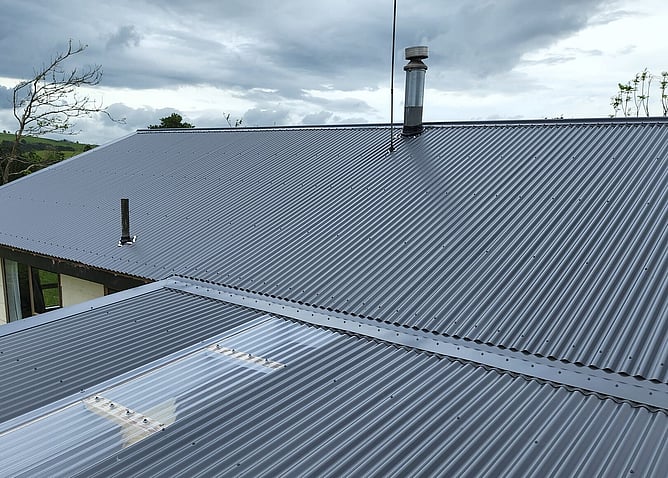
A re-roof on your Kerikeri or Baly of Islands home, is a good time to fix old problems properly, including issues with an existing woodburner flue. Before moving ahead, it’s important to understand how Bay of Islands conditions demand careful planning. Wind, salt, and humidity add extra stress and create unique challenges for any roof penetration.
Flood Roofing works across Kerikeri, Paihia, Kaikohe, Kawakawa, and Ōkaihau. Its roofing advice already warns that poorly handled penetrations can shorten the roof's lifespan. That matters even more when an older flue is already in place.
A woodburner affects more than the living room
Many homeowners think about the firebox first. During a reroof, the roof opening is just as important. The flue, flashing, underlay, and surrounding sheets all need to work together.
If the woodburner was installed years ago, the roof detail may not align well with the new roofing system. Flashings may be tired. Fasteners may be corroded. The opening itself may also need review before new sheets go on.
That is why reroofing and woodburner planning should not be treated as separate jobs. Once the old roof is off, it becomes easier to properly inspect the penetration. It is also the best moment to correct weak detailing.
Old flashings are a common weak point
A flue flashing lives in a hard-working part of the roof. It deals with heat, rain, movement, and weather exposure. Over time, even a small weakness can become a leak path.
Mid Northland’s coastal climate increases that risk. Flood Roofing notes that humidity, salt, and wind-driven rain all affect roof performance and punish weak penetrations faster.
This is especially relevant in exposed places like Paihia. It also matters on rural sites near Ōkaihau or Kaikohe. Open wind exposure can push water hard against the roof details around a flue.
Not every existing flue should stay as it is
Some homeowners assume the new roof will simply go around the old flue. That can work, but it should not be automatic. A reroof is the right time to ask whether the flue position, size, and condition still make sense.
Older installations may have signs of movement, patching, or water entry. In other cases, the woodburner still works well, but the roof detail has aged poorly. The roof and heating system need to be assessed together.
Kapiti Woodfires makes a similar point from the heating side. Its site focuses on woodburner supply, installation, servicing, and chimney work across Wellington and Kapiti. That joined-up approach makes sense because performance and safety depend on the full system.
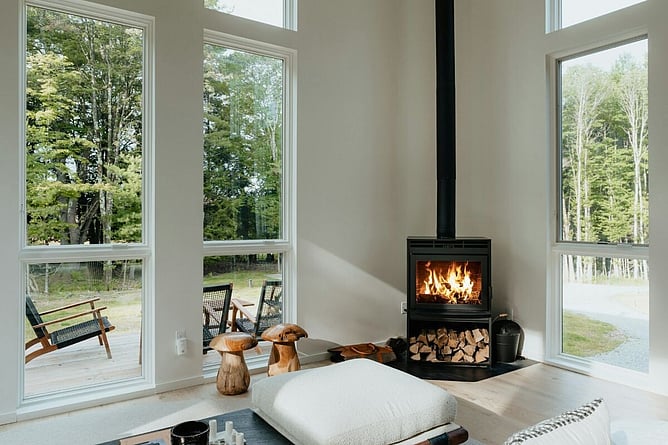
Installation standards still matter during a reroof
A reroof is not only a chance to improve appearance. It is also an opportunity to bring critical details up to a higher standard. That includes the way the flue passes through the roof.
Kapiti Woodfires says its NZHHA-certified team installs wood fires and wood burners across Wellington and Kapiti. Its site also notes that consultation, installation, and servicing are part of the process. That is relevant because reroofing often affects those same decisions right across New Zealand.
In another market, pages targeting Woodburners in Wellington show how fireplace supply, installation, and ongoing servicing are often handled together. That is a useful comparison because roof work around a flue also works best when planned as part of the full job.
Three local examples
A Kerikeri homeowner may have an older metal roof with a woodburner added years later. The fire may still be fine, but the flashing could be nearing the end of its life. A reroof is the right time to replace both the roofing around it and the weatherproof detail itself.
A Paihia property may face stronger salt exposure and more driving rain. In that setting, small penetration problems tend to show up faster. Materials and detailing need to suit a coastal roof, not just any roof.
A lifestyle property near Kawakawa or Ōkaihau may have long roof runs and more open wind exposure. That changes how water moves across the roof surface. It also changes how important neat, durable flashing work becomes.
What homeowners should check before work starts
Start with the age and condition of the current roof. Flood Roofing advises that repeated leaks, widespread corrosion, and failing coatings can make reroofing the smarter option. If that is already the case, the flue detail should be reviewed at the same time.
Next, check whether the existing woodburner setup has been trouble-free. Look for signs of past leaks, patch repairs, staining, or rust near the penetration. Those clues often point to a roof detail that needs more than a simple tidy-up.
Finally, think about sequencing. If roofing starts before the woodburner detail is confirmed, rework becomes more likely. When both trades plan early, the result is usually cleaner, safer, and easier to maintain.
The best reroofs deal with the full picture
An existing woodburner should never be ignored during a reroof. It affects waterproofing, layout, and long-term maintenance. In Northland’s coastal climate, those details matter even more.
The best result comes from looking at the whole system. That means the roof, the penetration, and the heating setup all get checked together. Done early, that approach reduces surprises and helps the new roof perform the way it should.
Get in touch with our team at Flood Roofing if you need to discuss a reroof project that needs a fireplace to be considered.