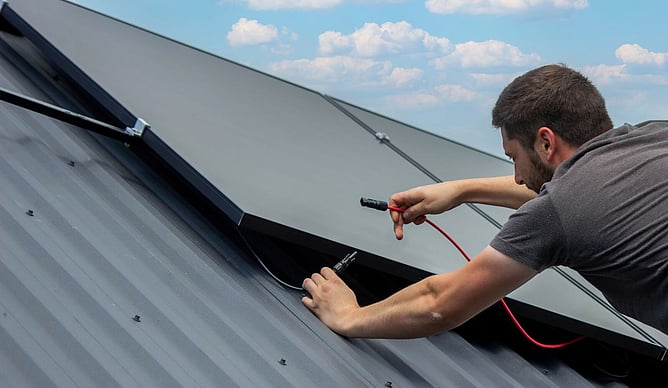
Solar is often treated like a later upgrade. For many homeowners, that is the wrong order. If the roof is not ready, solar planning becomes harder, slower, and sometimes more expensive.
That matters in Kerikeri, Paihia, Kaikohe, Kawakawa, and Ōkaihau. Flood Roofing installs new roofs and does roof replacements across these areas and already points out that a new roof can support future renewable energy add-ons. In the Bay of Islands, roof condition and weather exposure should be part of the solar conversation from the start.
An old roof can limit your options
Solar panels are built to stay in place for years. If the roof underneath is already ageing, the timing can become awkward. No homeowner wants to install panels and then discover the roof needs replacing soon after.
Flood Roofing makes this point in its energy-efficiency advice. Older roofs can have cracks, worn flashings, loose components, and underperforming insulation. Those issues do not disappear because solar is added on top.
A reroof gives homeowners a cleaner starting point. It also gives trades better access to inspect the structure, sealing, and penetrations before more equipment is added. That can make later solar work simpler and more reliable.
Roof condition matters as much as roof space
People often focus on how much sun the roof gets. That matters, but it is not the only question. The roof still needs to be sound, well-fixed, and suited to long-term use.
In the Bay of Islands, roofing also has to deal with salt air, humidity, and strong winds. Flood Roofing warns that coastal exposure can shorten the life of poor materials and weak installation methods. Those same conditions matter when homeowners are thinking about any future roof-mounted system.
A home in Paihia may be exposed to more salt and driving rain. A rural property near Ōkaihau may experience stronger open winds. A growing residential area in Kerikeri may have a modern roof shape, but still needs better planning around access and layout.
Reroofing is the best time to think ahead
Flood Roofing already positions reroofing as a chance to improve energy efficiency. Its blog notes better sealing, better insulation access, and better ventilation as part of a new roof. That makes reroofing the ideal time to consider future energy upgrades, too.
This does not mean every Kerikeri reroof needs solar straight away. It means the roof should not be planned in isolation. If solar is even a medium-term goal, that should shape the roofing conversation early.
The same logic applies to extensions and new builds. Flood Roofing’s services already frame roof upgrades as part of larger home projects. Solar works best when it is considered in that same joined-up way.
Electrical planning also starts early
The roof is one part of the picture. The electrical side matters as well. SES Electrical’s solar service page explains that its team works through assessment, system design, installation, and ongoing support for residential, commercial, and rural properties.
That early-planning approach is useful because solar is not just a panel decision. It affects layout, cable paths, switchboard planning, and how the property's power use changes over time. SES also highlights fit-outs that make future integration easier in new builds and upgrades.
In another region, service pages focused on solar power in Palmerston North show the same point clearly. Solar works best when assessment and design happen before the job becomes a retrofit problem.
Three local examples
A Kerikeri homeowner may be planning a reroof because the old roof is tired. If solar is a future goal, this is the time to discuss structure, access, and layout. It is much easier now than after the new roof is finished.
A Paihia property may look ideal for solar because it gets plenty of sun. But the roof still needs materials and detailing that can handle coastal exposure. Good weather resistance comes first.
A rural Kaikohe or Kawakawa property may have larger power needs than a standard suburban home. In those cases, the roofing and electrical decisions both need more planning. Roof space alone will not answer the full question.
What homeowners should check first
Start with the roof age and condition. If repairs are stacking up, reroofing may make more sense than adding more weight and long-term expectations to an ageing surface. Flood Roofing already advises that repeated problems often mean replacement is the smarter call.
Next, think about the wider project. Is this a renovation, extension, or new build? If so, bring roofing and electrical planning together early, before the work sequence gets locked in.Finally, think long-term. A roof should not only look good on completion day. It should still make sense when future upgrades arrive.
The smartest solar planning often starts above your ceiling
Solar is an electrical upgrade, but it begins with the roof. In Northland, that means thinking about weather, roof age, and future use at the same time. When that planning happens early, the whole project usually works better.
Talk to our team at Flood Roofing if you're considering solar and need your roof upgraded.