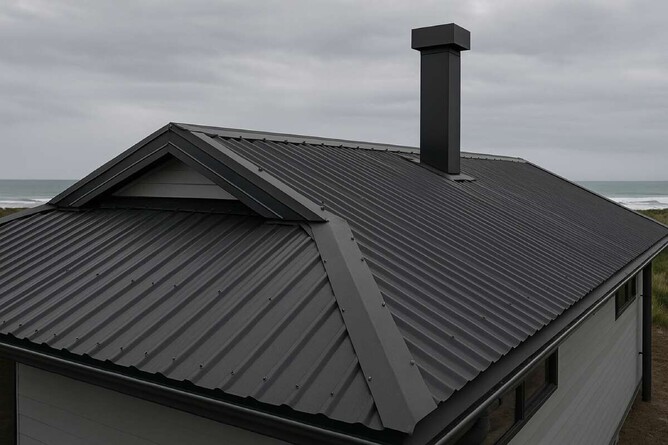
Mid Northland homeowners often discover too late that standard roofing approaches fail in coastal conditions. From Ōkaihau's exposed farmhouses to Kerikeri's growing residential areas and orchards, homes across mid Northland face unique challenges that generic roofing solutions simply can't handle.
As roofing specialists serving Kerikeri and nearby mid Northland for over eight years, we've seen the costly consequences when homeowners choose inappropriate materials or installation methods for coastal environments. Here are five critical factors that make mid Northland homes particularly vulnerable to roofing failure.
Salt Air Accelerates Metal Corrosion at Alarming Rates
Mid Northland's coastal proximity means your roof faces constant salt exposure, even if you're kilometres inland. Salt particles carried by coastal winds create a corrosive environment that can destroy standard roofing materials in half their expected lifespan.
The Problem in Mid Northland: In Kerikeri, we've seen standard galvanised roofing fail after just 8-10 years instead of the expected 20. Paihia properties face even more aggressive salt loading, with visible corrosion appearing within 3-5 years on inadequate materials.
Why Generic Solutions Fail: Standard roofing materials and basic galvanised steel weren't designed for Mid Northland's salt exposure. Regular fasteners corrode, creating leak points. Basic coatings fail, leading to widespread rust and expensive repairs.
What Expert Mid Northland Roofers Know: Professional roofing specialists in Mid Northland specify marine-grade materials: COLORSTEEL systems with enhanced zinc coatings, stainless steel fasteners, and corrosion barriers. We understand which coating systems survive Ōkaihau's direct exposure versus Maungaturoto's inland conditions.
The Cost of Getting It Wrong: A Ōkaihau client replaced their "budget" roof twice in 15 years before investing in proper coastal-grade materials. The total cost exceeded what expert installation would have cost initially, plus years of leak damage and insurance claims.
Extreme Wind Loading Requires Specialised Fastening Systems
Mid Northland's exposed position means homes face wind loads that exceed standard building assumptions. Rural properties around Ōkaihau and coastal areas near Paihia experience wind conditions that can literally tear improperly secured roofing from homes.
Mid Northland Wind Realities: Unlike sheltered urban areas, Mid Northland properties face unobstructed coastal winds. Ōkaihau's rural locations have no windbreaks, while Paihia homes face direct sea breezes that intensify during storms.
Standard Installation Failures: Generic roofing uses standard fastener spacing and basic screws adequate for normal conditions. In Mid Northland's wind environment, these inadequate fastenings lead to:
Sheet lifting and tearing during storms
Progressive fastener failure over time
Water penetration through loosened sheets
Complete roof loss during severe weather events
Expert Mid Northland Approach: Roofing specialists who understand local conditions use:
Heavy-duty fasteners rated for coastal wind loads
Closer fastener spacing in high-stress areas
Reinforced edge details and flashings
Wind-uplift calculations specific to each property's exposure
Real Mid Northland Example: After Cyclone Gabrielle, we inspected dozens of Local homes. Properties with expert installation remained intact, while homes with standard fastening lost significant roofing sections. The difference was specification knowledge specific to local conditions.
High Humidity Creates Hidden Condensation Problems
Mid Northland's coastal climate creates humidity challenges that cause hidden damage inside roof spaces. The combination of warm, moist air and temperature variations leads to condensation problems that standard roofing approaches don't address.
Mid Northland's Humidity Challenge: Coastal humidity, particularly around Paihia, creates conditions where warm air meets cooler roof surfaces, causing condensation. Kerikeri's transitional climate experiences dramatic humidity swings that standard ventilation can't handle.
Hidden Damage from Poor Ventilation:
Insulation becomes waterlogged, losing thermal performance
Timber framing develops rot and structural weakness
Mold growth affects indoor air quality
Metal components corrode from the inside out
Why Standard Ventilation Fails: Generic roofing uses minimal ventilation adequate for dry inland conditions. Mid Northland's persistent humidity overwhelms basic systems, creating trapped moisture that causes ongoing damage.
Specialist Solutions: Expert roofing specialists in mid Northland design ventilation systems specifically for coastal humidity:
Enhanced ridge and eave ventilation
Breathable underlay systems that handle moisture
Strategic airflow paths that prevent condensation buildup
Vapor barriers designed for mid Northland's specific conditions
The Hidden Cost: A Kerikeri homeowner discovered extensive timber rot after ignoring minor ceiling stains. What started as a condensation issue cost $40,000 in structural repairs because standard roofing hadn't addressed humidity challenges.
UV Plus Salt Combination Degrades Standard Materials
Mid Northland experiences an aggressive combination of intense UV radiation and salt exposure that rapidly degrades roofing materials not specifically chosen for these conditions.
Material Testing Environment: The combination of reflected UV from nearby water, direct coastal sun exposure, and constant salt presence creates conditions that age materials at accelerated rates. Ōkaihau's rural properties face unfiltered UV exposure, while Paihia homes deal with reflected light from water and sand.
Standard Material Failures: Regular paint systems and basic steel coatings experience:
Colour fading within 5-7 years instead of expected 15-20
Chalking and surface degradation
Coating failure allowing corrosion to begin
Thermal expansion issues not designed for coastal temperature swings
Professional Material Selection: Roofing specialists experienced in mid Northland conditions specify:
Premium COLORSTEEL systems tested in coastal environments
UV-stable colourways that maintain appearance
Thermal expansion allowances for coastal temperature variations
Coating systems with salt-air warranties
Long-Term Value Difference: Premium materials cost 20-30% more initially but last twice as long in mid Northland conditions. A Maungaturoto home with expert material selection looked new after 12 years, while nearby homes with standard materials needed complete replacement.
Choosing the right roofing materials is just as important as expert installation. Our guide on how different roofing materials perform in New Zealand weather explains which options stand up best to salt, humidity, and coastal storms.
Storm Exposure Demands Superior Installation Techniques
Mid Northland's position makes homes vulnerable to severe weather events that require installation techniques beyond standard building practices.
Mid Northland Storm Reality: Unlike protected inland areas, Local properties face:
Direct coastal storm impact in Paihia and Russell
Channeled wind effects around Ōkaihau
Salt-laden storm water that penetrates normal weather sealing
Rapid weather changes that test installation quality
Where Standard Installation Fails: Generic roofing installation uses minimum code requirements suitable for average conditions. Mid Northland storms exploit every weakness:
Basic flashing details fail under driving rain
Standard overlap lengths allow water penetration
Minimal fastening inadequate for storm loads
Poor junction sealing fails during weather events
Expert Mid Northland Installation: Experienced roofing specialists in mid Northland use storm-proven techniques:
Extended overlaps and enhanced sealing
Storm-rated flashing systems
Superior junction detailing at critical points
Installation methods proven in local storm conditions
Storm Damage Prevention: After major weather events, homes with expert mid Northland installation typically require only minor maintenance, while properties with standard roofing often need extensive repairs or complete replacement.
Case Study - Ōkaihau Farm Property: Following the 2023 severe weather events, we inspected a rural Ōkaihau property where expert installation from 2018 remained completely intact. The neighboring farm, roofed the same year with standard methods and materials, lost 40% of its roof coverage and required emergency repairs costing $25,000. The difference? Proper storm-rated installation techniques and coastal-grade materials designed for local conditions.
What This Means for Local Homeowners
Mid Northland's coastal conditions aren't just challenging, they're specifically aggressive toward roofing systems. The combination of salt exposure, wind loading, humidity, UV radiation, and storm vulnerability creates an environment that quickly exposes inadequate materials and installation methods.
The False Economy of Standard Roofing: Choosing standard roofing approaches for Mid Northland properties might save money initially, but typically costs significantly more over time through:
Premature replacement needs
Ongoing leak repairs
Interior damage from failed roofing
Lost home value from deteriorated appearance
The Value of Local Expertise: Roofing specialists who understand local conditions provide:
Material specifications proven in local environments
Installation techniques tested by coastal weather
Maintenance guidance specific to salt and humidity exposure
Warranty confidence backed by regional experience
Making the Right Choice: If you're building, renovating, or replacing roofing in Mid Northland, the question isn't whether you can afford expert roofing services. The question is whether you can afford not to use specialists who understand your specific coastal challenges.
Mid Northland homes deserve roofing solutions designed for the conditions they actually face, not generic approaches that work elsewhere but fail in coastal environments.
Warning Signs Your Roof Needs Expert Attention
Recognising problems early can prevent costly damage. Mid Northland homeowners should watch for these specific warning signs that indicate their roof may not be adequately protecting their property:
Immediate Concerns:
Brown rust streaks on roof surfaces (salt corrosion beginning)
Loose or missing sheets after moderate winds
Ceiling stains that appear during humid weather, not just rain
Fading or chalky appearance on roof surfaces within 5-7 years
Overflowing gutters during normal rainfall
Progressive Damage Indicators:
Multiple small leaks that seem to multiply over time
Musty odours in roof spaces or upper floors
Increasing energy bills due to compromised insulation
Visible daylight through roof spaces
Creaking or movement sounds during windy conditions
Emergency Situations: Any local homeowner experiencing multiple warning signs should seek immediate professional assessment. Coastal conditions can turn minor issues into major structural problems quickly.
The True Cost of Delayed Action in Mid Northland
Postponing proper roofing solutions in Mid Northland's harsh conditions creates exponentially increasing costs:
Year 1-3: Minor repairs, easily manageable with proper materials and techniques.
Year 4-7: Accelerated deterioration requires increasingly frequent maintenance. Interior damage begins affecting insulation and structural timber.
Year 8-12: Major repairs or complete replacement becomes necessary, often costing 3-4 times the original preventive investment.
Long-term: Structural damage, mould remediation, and interior restoration can cost tens of thousands beyond roofing replacement.
Maintenance Strategies for Coastal Conditions
Even expertly installed roofing like ours in mid Northland benefits from proactive maintenance designed for coastal challenges:
Annual Maintenance:
Professional salt wash to remove corrosive buildup
Fastener inspection and re-tightening where needed
Flashing condition assessment at vulnerable points
Gutter cleaning and outlet verification
Ventilation system inspection for salt blockages
Seasonal Preparation:
Pre-winter inspection focusing on storm readiness
Post-storm assessment for any damage requiring immediate attention
Spring humidity preparation to prevent condensation issues
Summer UV protection verification
Professional vs DIY Maintenance: While homeowners can perform basic maintenance like gutter cleaning, Mid Northland's specific challenges require professional assessment. Salt damage, wind uplift issues, and condensation problems need expert evaluation to prevent minor concerns becoming major failures.
Concerned about your roof's ability to handle coastal conditions? Contact our experienced roofing specialists trusted by local homeowners. Call Flood Roofing at 0800 4 FLOOD for expert assessment of your property's specific needs.