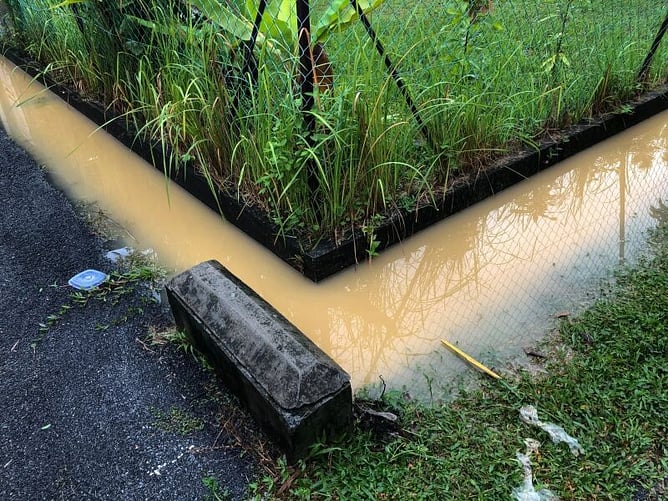
After heavy rain, many homeowners notice the same problem. Water sits near the house, lawns stay boggy, or paths turn slick and soft.
The hard part is knowing who to call first. Is it a roofing issue, or has the problem moved into site drainage?
In our part of Northland, this question comes up often. Kerikeri, Paihia, Kaikohe, Kawakawa, and Ōkaihau all get periods of hard rain. Coastal moisture, leaf buildup and fast downpours can quickly expose weak points.
The first thing to know is this. Roofing and drainage often affect the same problem, but they do different jobs.
What roofing is responsible for
A roofing system should collect rainwater and properly divert it off the house. That includes the roof surface, flashings, gutters, spouting, and downpipes.
If water is spilling from gutters, roofing is the right place to start. The same applies if downpipes are too small, badly placed, or blocked.
Sometimes the signs are obvious. You may see overflow during rain, staining on cladding, or splash marks near the base of the wall.
Other times, the issue builds slowly. Fascia boards stay damp, paint breaks down, or moss grows around shaded roof edges.
In many Bay of Islands homes, blocked spouting is a major cause. Bush sections, mature trees, and high moisture levels can all add to the problem.
If the roof is not shedding water well, the ground below often pays the price.
When the problem is no longer just the roof
Roofing moves water off the house. It does not control what happens once that water reaches the ground.
That is where drainage becomes important. If downpipes discharge into poor ground conditions, water can still pool around the home. You might have well-installed spouting and still have a soggy site. That can happen when runoff has nowhere to go.
This is common on sites with clay soil, poor fall, blocked stormwater lines, or older drainage layouts. Rural properties can have the same issue.
New builds can also run into trouble. A clean roof and new gutters will not solve a drainage design problem.
Signs that it is mainly a roofing issue
Start with the roofline when you notice any of these signs. They usually suggest the roof is not collecting or moving rainwater as it should before it ever reaches the ground.
Water pours over the front edge of the gutter during rain.
This often means the gutter is blocked, too small for the roof area, or unable to cope with heavy rainfall. In some cases, the fall is wrong, so water cannot move fast enough toward the downpipe.
Downpipes back up or spill at bends.
That can point to a blockage from leaves, debris, or sludge inside the pipe. It can also happen when the downpipe layout is too tight or narrow, or when it is under strain during a strong downpour.
Gutters sag or hold standing water.
A gutter should empty out after rain, not sit full for hours. If water remains in sections, the brackets may have dropped, the fall may be uneven, or the gutter run may have warped over time.
There are leaks near soffits, fascia, or wall junctions.
This can mean water is escaping where it should be contained. Overflow, damaged flashings, loose fixings, or worn junction points can all allow moisture into places it should not reach.
Water marks appear directly below an overflow point.
Staining on cladding, damp patches, or splash marks below the gutter line often show that runoff is escaping from the roof system itself. If the marks line up with a gutter join, corner, or downpipe entry, that is a strong clue that the issue starts above.
In these cases, the roof system is likely not handling runoff properly. Cleaning may solve it in some cases, but older or damaged components may need repair or replacement to get water moving properly again.
Signs drainage may be part of the problem
Now look at what happens after water leaves the downpipe. If the roof seems to be shedding water properly, but the site still stays wet, the issue may sit lower down.
The ground stays wet for days after rain.
This often suggests water is not soaking away or draining off as it should. It can point to poor site fall, compacted ground, heavy clay soil, or a stormwater system that is not coping well.
Water collects near paths, slabs, or entry points.
When puddles form beside doors, concrete edges, or walkways, the problem may be where runoff is being discharged. Even if the roof system is working, water can still cause trouble if it is being sent into the wrong area.
The same part of the section floods after every storm.
A repeat problem in one spot usually means the issue is built into the site layout. That could be a low point in the section, a blocked underground line, or a discharge area that cannot handle the volume of water.
Water moves away from the downpipe, then tracks back toward the house.
This is often a sign that the ground falls the wrong way. On some sites, water is technically leaving the roof, but it is not being carried far enough from the building before it turns back.
There is no visible gutter overflow, but the area still becomes boggy.
This is one of the clearest signs that the roof may not be the main problem. If spouting and downpipes seem to be coping during rain, but the lawn or the base of the house still gets saturated, drainage is more likely to be the issue.
The discharge point struggles in heavy rain.
Sometimes water reaches the outlet, but the outlet cannot handle the volume quickly enough. That is more common during strong downpours, where runoff builds quickly, and the ground or stormwater system cannot clear it in time.
In these cases, the roof may only be part of the picture. The real issue may be how stormwater is carried, dispersed, or absorbed once it reaches the ground. That is why it helps to assess both the roofline and the site before deciding what needs fixing.
If you are trying to understand what happens beyond the roofline, it helps to look at how broader drainage solutions are used on sites with stormwater, soak pits, or new build drainage needs.
Why both trades matter
Homeowners often hope one fix will solve everything. Sometimes it does, but not always.
A roofing contractor may correct the roof runoff, yet pooling continues. A drainage contractor may improve the discharge point, yet overflow still happens above.
That is why it helps to think in stages. First, check how the roof collects and drops water. Then check how the site carries it away.
The two systems need to work together. If one fails, the other often gets blamed.
What to check before you call someone
You can do a quick inspection after the rain. Keep it simple and stay safe.
Look for overflow points along the gutter. Check whether water is coming from one section or the whole run.
Watch where each downpipe sends water. Does it discharge cleanly, or does it spill onto the ground beside the house?
Look at the ground below. Is the puddling directly under the gutter, or several metres away?
Also, note how long the water stays there. A short-lived puddle is different from ground that stays wet for days.
These details help narrow the problem down faster. They also make it easier for the right trade to assess the site.
The practical rule
If the water is failing at the roof edge, start with roofing. If the roof sheds properly but the site stays wet, drainage may be the next step.
In some cases, both need attention. That is especially true in older homes, sloped sections, and properties exposed to heavy Northland rain. The goal is not to guess. The goal is to work out where the problem starts and where it ends.
To protect your home, always identify if the issue starts with the roofing or the drainage. Act based on where the water fails, address roofing if overflow is at the roof edge, or drainage if water pools around the house despite clear runoff. A clear diagnosis saves time and prevents future damage.
Talk to us at Flood Roofing now for all your roofing, guttering and spouting needs.