
Putting off a roof replacement is one of those decisions that feels harmless at first. The roof is still up there, the house still feels dry most days, and it is easy to tell ourselves we will deal with it “next season” when things calm down.
The problem is that roofs rarely fail in a neat, predictable way. They tend to deteriorate quietly, then suddenly, and by the time the damage shows up inside the house, we are often dealing with much more than roofing iron or tiles.
In Kerikeri and across the Bay of Islands, the conditions can be tough on older roofs. Moisture, wind-driven rain, coastal salt air in many pockets of the region, and strong seasonal downpours all have a way of turning small weaknesses into expensive repairs.
If you are weighing up whether to wait another year, it helps to understand what delaying can truly cost, and why a planned roof replacement is almost always kinder on the home and the budget than an emergency fix
What Actually Happens When a Roof Starts to Fail
A roof not only protects the rooms beneath it. It protects the structure, insulation, electrical systems, interior linings, and everything you have invested in over the years. When the roof covering, fixings, or flashings begin to fail, water rarely drips straight down in a helpful way. It travels.
Water can track along underlay, run down rafters, pool around penetrations, and soak insulation long before you ever see a ceiling stain. That is why “we only noticed it recently” is such a common story. The leak may have been present for a while, but hidden inside the roof cavity.
The other challenge is that roof systems fail in layers. A patch might address the visible symptom, but if the underlying issue is age-related deterioration across multiple areas, the same type of problem tends to appear somewhere else next time it rains hard.
The Most Expensive Dangers of Delaying a Roof Replacement
Leaks that damage far more than the ceiling
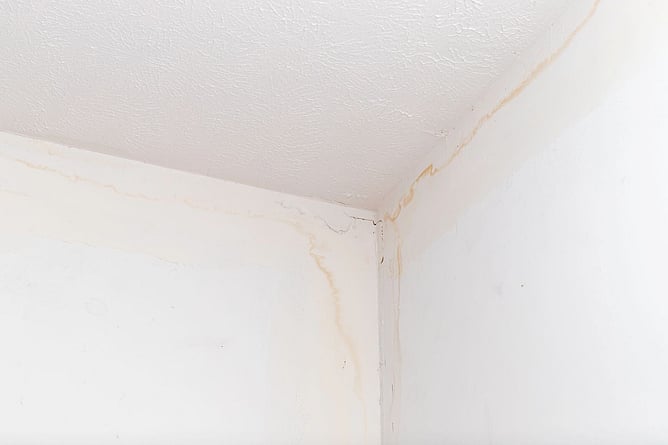
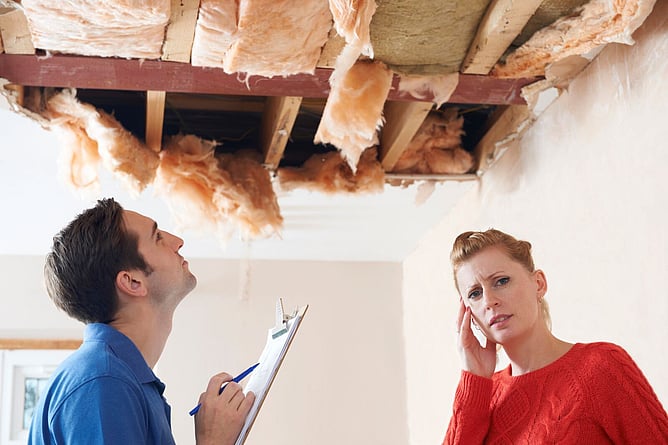
Once moisture gets into the roof space, the damage can spread quickly. Ceiling linings, paint, insulation, and even light fittings can be affected, and the cost is rarely limited to a simple repair.
Wet insulation loses performance and can hold moisture where you do not want it. Interior repairs then become part of the conversation, not an optional extra.
If the leak is intermittent, it can be even more frustrating because it encourages delays. “It only happens in certain rain” often means water is entering at specific wind directions or rainfall intensities, which are common in coastal and semi-coastal parts of the Bay of Islands.
Hidden timber rot and structural repairs
One of the biggest risks in leaving a failing roof too long is timber damage. If framing, battens, or fascia boards are repeatedly exposed to moisture, rot can set in.
The earlier we catch it, the more likely we can keep the scope focused on roofing. The longer it is left, the more likely the job grows into carpentry repairs that add time, cost, and complexity.
This is also where delays can remove your choices. Instead of planning a straightforward roof replacement in Kerikeri or nearby regions, you may be forced into a rapid decision after a storm reveals soft spots or sagging areas that cannot be ignored.
Mould and poor indoor air quality
Moisture problems are not only about visible damage. A damp roof space can contribute to mould growth and persistent musty smells, and it can make the home feel harder to heat and ventilate.
Even if mould is not obvious inside living areas, long-term moisture in the roof cavity is never a good sign.
If you have noticed recurring condensation, damp smells after rain, or insulation that feels wet or clumped, we treat that as a signal that the roof system needs a proper assessment, not just a cosmetic tidy-up.
Greater storm vulnerability
Older roofs that are already at the edge of their lifespan are far more likely to fail when the weather turns. In mid Northland, we can see heavy rain events and strong winds that test every weak point. When the roof is compromised, storms turn small defects into urgent problems, often at the worst possible time.
Why Bay of Islands Conditions Can Accelerate Roof Deterioration
Kerikeri is often the focal point for homeowners searching online, but we see the same patterns right across the Bay of Islands. Exposure levels vary from place to place, yet the regional mix of moisture, wind, and coastal influence often accelerates deterioration when a roof is older or poorly suited to its site.
Salt air and corrosion in coastal pockets
If you are closer to the coast, salt-laden air can accelerate corrosion, particularly around fixings, flashings, roof penetrations, and roof edges. It is one reason metal roofing choices, coatings, and maintenance habits matter so much in this region.
Even a roof that looks acceptable from the ground can have corrosion starting in the details that do the real waterproofing work.
Humidity, moss growth, and water retention
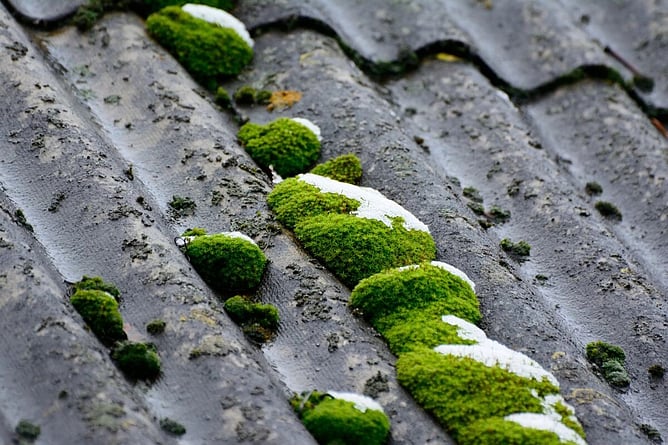
Moss and lichen are not just an aesthetic issue. They hold moisture against the surface and can contribute to faster breakdown, especially on older materials.
If growth is persistent and comes back quickly after cleaning, we treat it as a sign that the roof is spending too much time damp, and that the protective layers may already be failing.
The key is being honest about whether maintenance is still buying meaningful time or simply delaying the inevitable while increasing the risk of hidden damage.
Not every roof in the region needs the same solution
There is no one-size-fits-all answer across the Bay of Islands. A sheltered inland property may face different stresses than a home that gets wind-driven rain and salt exposure. That is why a proper evaluation matters. We want the roof system to suit the site, not just look good on day one.
The False Economy of “Just Fixing It Again”
One of the most common financial traps is the repeated repair cycle. A leak is patched. Another appears. The roof is cleaned. The fasteners are tightened. Then the same issues return, often in new locations.
Repairs absolutely have their place, especially when the roof is fundamentally sound, and the issue is contained. But once a roof is approaching the end of its life, repeated repairs can become a false economy. You pay multiple times, and you still carry the risk that the next storm will expose a new weak spot.
If you are dealing with recurring problems, it is often smarter to step back and ask a bigger question: are we repairing a roof that still has good years left, or are we chasing symptoms on a roof that is ready to be replaced?
Warning Signs We Never Recommend Ignoring
Some issues are easy to rationalise away, especially if they seem minor. Here are the signs we consider meaningful, particularly for older homes in Kerikeri and the wider Bay of Islands.
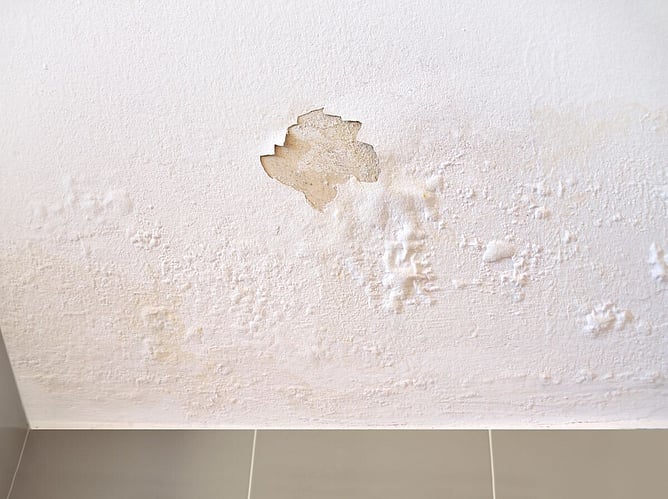
Water stains, bubbling paint, or “mystery damp” after rain
Even a small stain can represent a larger moisture path in the roof space. The earlier we investigate it, the better the chances of keeping the scope controlled.
Rust, corrosion, or failing fasteners
Look for rust bleeding, corrosion around screws, and weakened areas around flashings and roof penetrations. These details are often where water gets in first.
Moss growth that keeps returning
Persistent growth can indicate chronic dampness and can contribute to faster roof surface breakdown, especially on older materials.
Sagging lines, uneven roof planes, or soft areas
These can point to structural issues, water damage, or long-term deterioration. If you see sagging, we do not recommend delaying an inspection.
Gutters and spouting struggling to cope
Overflowing gutters, leaking joints, and poor water management can magnify roof and wall problems. In high-rainfall conditions, effective spouting and downpipes are part of protecting the whole home, not a separate issue.
Repair or Replace: How We Decide What Makes Sense
When people search for a roof replacement for their Kerikeri or Bay of Islands home or business, they are often already suspecting the roof is beyond minor repairs. Still, we believe the best outcome comes from making the decision based on evidence, not fear.
When a repair can be the right move
A repair can make sense when the roof is relatively young, the problem is clearly identified, and the damage is localised. If the roof has good life left and the system is performing well overall, we would rather fix what needs fixing and help you keep it performing.
When replacement is the smarter long-term choice
Replacement is often the better option when corrosion is widespread, leaks are recurring, the roof is nearing the end of its expected lifespan, or multiple areas are failing at once.
In these situations, a roof replacement is not just a cosmetic improvement. It is a way to reduce ongoing risk and protect the structure underneath.
Planned replacement also gives you control over timing and materials. That is a big deal in the Bay of Islands, where the right system for a coastal property can look different from what suits a more sheltered inland site.
What we expect a proper assessment to cover
A useful assessment should look beyond the obvious. We want clarity on the roof covering condition, fixings, flashings, penetrations, and any signs of moisture activity in the roof cavity.
The goal is to give clear options and honest recommendations, so you can choose the path that best protects the home.
What You Gain by Replacing Before It Becomes an Emergency
A proactive roof replacement is not only about avoiding worst-case scenarios, although that matters. It is also about getting a better overall result.
Better protection and fewer surprises
When we replace before damage spreads, the job is usually more straightforward. That often means fewer hidden repairs and a cleaner project from start to finish.
A chance to choose materials that match your location
If you are in or near coastal conditions, roofing material selection and detailing are critical. Choosing a system designed to handle local exposure can make a noticeable difference to longevity and peace of mind.
Comfort improvements and efficiency gains
A roof replacement can be a good time to address insulation performance and heat control, especially if the home is older. Many homeowners notice the home feels more stable in temperature after upgrades that reduce heat gain in summer and heat loss in winter.
Final Thoughts: Delaying Usually Costs More Than We Think
If you are on the fence about timing, we encourage you to treat roof problems the same way you would treat water problems anywhere else in the house. They rarely improve with time, and the cost of delay is often paid in hidden damage, not just a bigger roofing quote.
For homeowners looking at a Roof replacement in Kerikeri or mid Northland, the best-case scenario is catching the roof at the point where replacement is planned, controlled, and focused on the roof itself.
The longer we wait, the more likely the scope expands into interior repairs, timber work, mould issues, and storm-driven failures that force rushed decisions.
If you are in Kerikeri or anywhere across the Bay of Islands and you have noticed persistent leaks, corrosion, recurring moss, or any of the warning signs above, it is worth getting clarity now.
A straightforward assessment can tell you whether a repair still makes sense, or whether a roof replacement is the safer long-term move. Contact our team at Flood Roofing now for a free quote.
PH: 0800 4 FLOOD