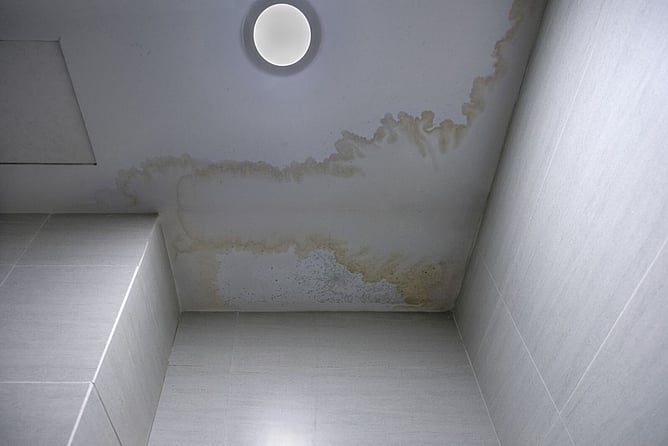
A brown patch on the ceiling is one of those household problems that is easy to ignore at first. It might look small, dry or harmless, especially if it only appears after heavy rain. But ceiling water stains are usually a sign that moisture has found its way into a place it should not be.
For homeowners in Kerikeri, Paihia, Kaikohe and across the Bay of Islands, water stains can be caused by several things: coastal weather, ageing roofing, blocked spouting, condensation, plumbing faults or poor ventilation. The tricky part is that the stain itself does not always tell you where the water came from. Moisture can travel along framing, insulation or ceiling linings before it becomes visible inside the home.
Here are some of the most common hidden causes of ceiling water stains in New Zealand homes, and when it is time to call in a roofing professional.
A Small Roof Leak That Only Shows Up in Heavy Rain
One of the most common causes of ceiling staining is a roof leak. However, not every roof leak is obvious. Some only appear when rain is heavy, wind-driven or coming from a particular direction.
In coastal areas like the Bay of Islands, roofs are exposed to salt air, humidity, strong sun and sudden weather changes. Over time, this can affect roofing materials, fixings, flashings and seals. A tiny gap around a screw, ridge cap, flashing or roof penetration may allow water in during a storm, even if the roof looks fine from the ground.
Water may then run along the underside of the roof, collect in insulation, and finally show as a stain on the ceiling days later. That delay can make the source difficult to identify without a proper roof inspection.
Common roof-related causes include:
Loose or ageing roofing screws
Damaged flashings around walls, chimneys or skylights
Cracked sealants around roof penetrations
Rust or corrosion on older metal roofing
Poorly repaired sections of roof
Storm damage from branches or debris
If the stain appears after rain, grows during wet weather, or is located near an external wall, roof valley, skylight or chimney, the roof should be one of the first areas checked.
Blocked Gutters and Overflowing Spouting
Ceiling water stains are not always caused by a hole in the roof. Sometimes the issue starts at the roof edge.
When gutters or spouting are blocked with leaves, moss, lichen, seed pods or debris, rainwater cannot drain away properly. Instead, it may overflow back toward the fascia, roof cavity or wall framing. In heavy Northland rain, this can happen quickly, especially if the spouting is undersized, cracked, sagging or poorly aligned.
Homes near trees or exposed to coastal winds often need more regular gutter maintenance. A blocked downpipe can also force water to pool in the gutter, increasing the chance of overflow into unwanted areas.
Warning signs include water spilling over the gutter edge, staining on exterior cladding, damp soffits, mould near the ceiling line, or water marks that appear close to external walls.
Flood Roofing provides gutters and spouting services in Kerikeri and the Bay of Islands for homeowners who need old, cracked or inefficient spouting replaced with a system that moves water safely away from the home.

Leaking Roof Valleys
Roof valleys carry a lot of water. They are the internal channels where two roof planes meet, and during heavy rain they can become one of the busiest parts of the roof.
If a valley is blocked by leaves, poorly installed, rusting or damaged, water may overflow or track beneath the roofing. Because valleys often sit above hallways, living areas or bedrooms, the first visible clue may be a stain in the middle of a ceiling rather than near an outside wall.
This is one reason homeowners should avoid assuming a stain is directly below the leak. Water can enter at the roof valley, travel along a purlin or truss, and appear some distance away.
A roofing inspection can check whether valleys are clear, properly flashed and still suitable for the roof’s age and design.
Condensation in the Roof Cavity
Not every ceiling stain is caused by rainwater entering from outside. In some New Zealand homes, condensation can create moisture marks from inside the roof space.
Condensation occurs when warm, moist indoor air rises and meets cooler surfaces in the ceiling or roof cavity. This is more common in homes with poor ventilation, limited insulation, unflued gas heaters, bathrooms without good extraction, or roof cavities that cannot breathe properly.
Unlike a roof leak, condensation may appear as widespread dampness, mould spots or water marks rather than one clear stain. It may also be worse in winter, early morning or after showers and cooking.
Signs that condensation may be involved include:
Musty smells in rooms or wardrobes
Mould around ceiling corners
Damp insulation
Water marks in several rooms
Stains that appear even when there has been little rain
Condensation problems can sometimes be improved with better ventilation, bathroom extraction, insulation upgrades and roof cavity airflow. However, it is still worth ruling out roofing issues first, especially in older homes.
Plumbing Leaks Above the Ceiling
If the stain is below a bathroom, laundry, hot water cupboard or upstairs kitchen, plumbing may be the cause. A leaking pipe, shower waste, toilet connection, hot water cylinder valve or drainage fitting can slowly release water into the ceiling cavity.
Plumbing leaks can be misleading because they may not depend on rain. The stain might grow after showers, when the washing machine runs, or when hot water pressure changes. You may also notice bubbling paint, soft gib, dripping sounds, low water pressure or a damp smell.
This is where it helps to think beyond the roof. A roofer is the right person to assess roofing, flashings and spouting, but plumbing and drainage issues need the right trade as well. For example, homeowners may need a local specialist for plumbing when the source of water damage could involve pipes, drains or roof-related leaks.
The key is to identify the source correctly before repairing the ceiling. Painting over a stain without fixing the leak will only hide the problem temporarily.
Failed Flashings Around Skylights, Vents and Chimneys
Anything that penetrates the roof is a potential weak point. Skylights, vents, flues, chimneys and aerial mounts all need proper flashing and sealing to keep water out.
Over time, sealants can dry out, metal flashings can lift, and movement in the building can create small gaps. In exposed areas around Kerikeri and the Bay of Islands, wind-driven rain can push water into these gaps more easily than light rain falling straight down.
A stain near a skylight or fireplace is a strong clue that flashing may be involved. However, water can still travel, so the visible stain may not sit exactly below the penetration.
A professional roof inspection can identify whether the flashing needs repair, replacement or better integration with the roofing system.
Old Repairs That Have Started to Fail
Many ceiling stains come from areas that have been patched before. Temporary sealants, mismatched materials or quick fixes may hold for a while, but they often fail under repeated sun, rain, expansion and contraction.
This is common on older metal roofs, roofs with previous storm damage, and properties where maintenance has been delayed. A small patch can also hide a larger issue, such as worn roofing, poor drainage or corrosion around fixings.
If a stain keeps coming back in the same area, it is a sign that the underlying problem has not been properly resolved. In some cases, a targeted repair is enough. In others, the more cost-effective long-term option may be re-roofing or upgrading old spouting at the same time.
Water Entering Through Walls or Cladding
Sometimes a ceiling stain is not caused by the roof surface at all. Water can enter through wall cladding, windows, joinery, decks, balconies or upper-level junctions, then travel into the ceiling cavity.
This can be particularly hard to diagnose because the roof may be in good condition. The issue may sit where a roof meets a wall, where flashing has been poorly detailed, or where exterior cladding has aged or cracked.
Signs can include staining near ceiling edges, dampness around window heads, swollen skirting, peeling paint, or moisture that appears after wind-driven rain.
A careful inspection of the roofline, flashings, exterior walls and drainage paths is often needed to find the true source.
What Should You Do When You Notice a Ceiling Stain?
The first step is to take it seriously. A small stain can point to a larger moisture problem above the ceiling, especially if insulation, framing or electrical fittings are nearby.
Homeowners should:
Note when the stain appears or gets worse
Check whether it follows rain, showers or appliance use
Look for overflowing gutters during heavy rain
Avoid poking or cutting into sagging ceiling linings
Move furniture and valuables away from the area
Arrange an inspection before repainting
If the ceiling is sagging, dripping heavily or near electrical fittings, treat it as urgent and get professional help.
Protect Your Home Before a Small Stain Becomes Major Damage
Ceiling water stains are more than cosmetic. They are warning signs that your home’s weather protection, drainage or plumbing may not be doing its job properly.
For Bay of Islands homeowners, the combination of coastal air, regular rainfall, strong sun and seasonal storms makes roof and spouting maintenance especially important. The earlier you identify the cause, the easier it is to prevent further damage to ceilings, insulation, framing and interior finishes.
Our Kerikeri-based team works across the Bay of Islands and Northland, helping homeowners with roof replacements, new roofing, repairs, gutters and spouting that protect homes for the long term. If you have noticed water stains on your ceiling, recurring damp patches, overflowing spouting or signs of a roof leak, contact Flood Roofing today.