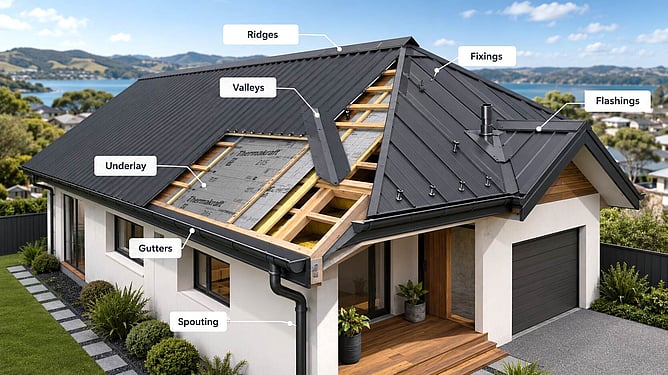
Most homeowners know their roof is important, but many do not know what each part of the roof actually does. From the ground, it is easy to think of a roof as one large sheeted surface that keeps the rain out. In reality, a roof is a complete system made up of many smaller parts, and each one has a job to do.
That is why roofing terms can feel confusing when you are getting a quote, booking a roof inspection, planning a new roof, roof replacement, or trying to understand a leak.
You may hear words like fixings, flashings, underlay, penetrations, valleys, ridges, gutters and spouting, but unless someone explains them clearly, they can sound more complicated than they need to be.
This guide breaks down the main parts of a roof in plain English. You do not need to become a roofing expert, but understanding the basics can help you ask better questions, compare advice more confidently, and spot why small details can make a big difference to the long-term performance of your home.
Why It Helps to Understand Basic Roofing Terms
A good roof is not just about the roofing sheets you can see from outside. Those sheets are important, but they rely on the rest of the system to work properly. The fixings need to hold everything securely.
The flashings need to protect the joins and edges. The underlay needs to help manage moisture beneath the roof surface. The valleys and ridges need to direct water correctly. The gutters and spouting need to collect rainwater and move it away from the home.
When all of those parts are installed and maintained properly, the roof can do its job. When one part fails, the issue can spread. A small leak around a flashing can damage internal linings.
Blocked spouting can cause water to overflow into areas it should not reach. Loose or rusted fixings can create entry points for moisture. A poorly detailed penetration can become a recurring leak every time heavy rain hits from the wrong angle.
This matters even more in Kerikeri, the Bay of Islands and wider Northland, where roofs deal with salt air, humidity, strong sun, heavy rain, wind and organic debris from surrounding trees.
Local conditions can be hard on roofing materials, so the small details are not just finishing touches. They are part of the protection system.
What Are Roof Fixings?
Roof fixings are the screws, fasteners, clips, washers and related components that hold roofing materials in place. On a metal roof, fixings are one of the most important parts of the system because they secure the roof to the structure and help keep the roof weathertight.
A fixing may look small, but it carries a lot of responsibility. It needs to hold firm through wind, heat, rain and movement. It also needs to be compatible with the roofing material and installed correctly so it does not damage the sheet or create a weak point.
Over time, roof fixings can wear, loosen or corrode. Washers can perish. Screws can rust. Movement in the roof can affect how well they seal. If fixings are old, poorly installed, or not suited to the environment, water can begin to enter around the fixing points.
Signs of fixing problems can include rust around screw lines, small stains on ceilings, loose screws, lifted roofing sheets, or leaks that seem to appear during wind-driven rain.
Sometimes the roof sheets themselves still have life left in them, but the fixings are starting to let the system down. That is why we always look closely at fixings during a roof inspection.
What Are Roof Flashings?
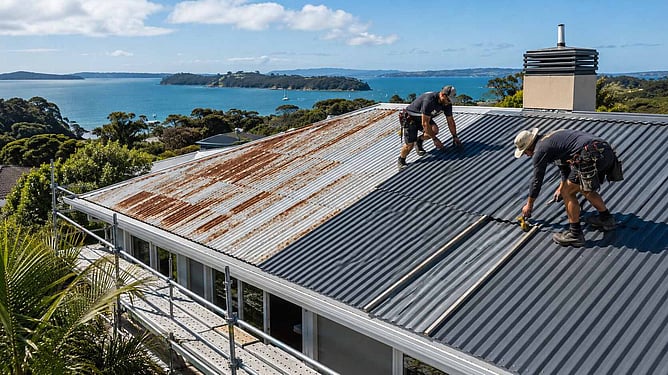
Flashings are shaped pieces of metal used to weatherproof the vulnerable parts of a roof. They are installed where roof surfaces meet, where the roof meets a wall, around penetrations, along edges, at valleys, at ridges and in other areas where water needs to be guided away safely.
In simple terms, flashings protect the joins. A roof is not one perfectly flat, uninterrupted surface. It has changes in direction, edges, corners, junctions and openings.
Those areas need careful detailing because water naturally looks for gaps. Flashings help close off those weak points and direct rainwater back onto the roof surface or into the drainage system.
Common flashing areas include chimneys, skylights, vents, flues, wall junctions, barge edges, parapets, valleys, hips and ridges. The New Zealand Metal Roofing Code of Practice lists several flashing types, including ridge and hip, barge and verge, parapet cappings, apron and valley flashings.
Good flashing work is one of the biggest differences between a roof that performs well and a roof that causes ongoing issues. Flashings need to be measured, folded, installed and sealed correctly.
They also need to allow for movement where required. If they are too short, poorly lapped, badly sealed, damaged or corroded, they can become a direct path for water.
For homeowners, flashings are worth taking seriously because many roof leaks begin at the details, not in the middle of an open roof sheet.

What Is Roofing Underlay?
Roofing underlay is the layer installed beneath the outer roofing material. You usually cannot see it once the roof is complete, but it plays an important role in the overall roof system.
Underlay helps manage moisture beneath the roof cladding. It can provide a secondary layer of protection, help control condensation and support the weathertightness of the roof assembly.
New Zealand metal roofing guidance describes roofing underlay as helping to temporarily absorb condensation on the cold underside of the roof system until conditions allow that moisture to evaporate.
This is especially relevant in Northland, where humidity and temperature changes can affect roof cavities. Moisture management is not only about keeping rain out from above. It is also about helping the roof system deal with condensation and internal moisture movement.
If the underlay is damaged, poorly installed, missing in areas, or no longer performing as it should, the roof may be more vulnerable to moisture issues. In some older homes, underlay can deteriorate over time.
In new roof installations, correct underlay selection and installation are part of getting the whole system right from the start.
What Are Roof Penetrations?
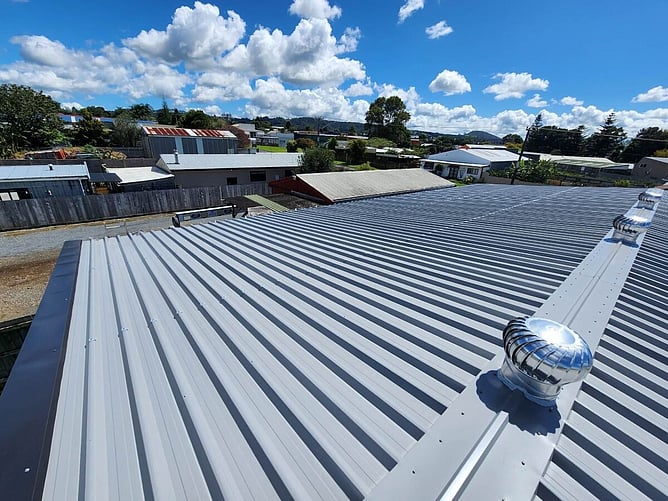
A roof penetration is anything that passes through the roof surface. This can include fireplace flues, vents, skylights, extractor outlets, plumbing vents, aerials, pipework and solar-related fittings.
Penetrations are common, but they need careful attention because they interrupt the roof surface. Every time something goes through the roof, that opening needs to be properly flashed and sealed so water cannot get in around it.
This is why penetrations are one of the first places we check when investigating a leak. The roof sheet may be fine, but the detailing around a vent, flue or skylight may have failed. Sealants can break down, flashings can move, and older fittings can become less reliable over time.
Good penetration detailing starts with good planning. The position of the penetration matters. The type of flashing matters. The compatibility of materials matters. Ongoing maintenance matters too.
The Metal Roofing Code of Practice includes specific guidance for penetration design, including flashing methods for roof openings.
For homeowners planning a new build or renovation, it is always better to think about penetrations early. Items like skylights, bathroom vents, kitchen extraction, fireplaces and future solar installation can all affect the roof design.
What Are Roof Valleys?
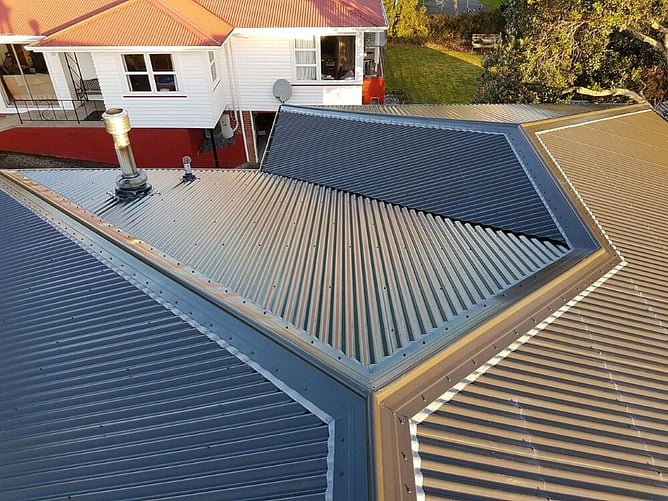
A roof valley is the internal channel where two roof planes meet. When rain falls on both sides of the roof, water runs down into the valley and is carried toward the gutter or spouting system.
Valleys often handle a lot of water, especially during heavy rain. Because they collect runoff from more than one roof area, they need to be correctly sized, well installed and kept clear of debris.
If a valley becomes blocked with leaves, moss, lichen or wind-blown debris, water can back up or overflow. If the valley metal rusts, is poorly fixed, or was not detailed correctly, leaks can develop.
In some cases, valley issues only show up during heavy rain because normal rainfall does not place enough pressure on the system to reveal the problem.
Signs of valley trouble can include staining on ceilings, dampness near internal corners, visible rust, debris build-up, water overflowing at roof junctions, or repeated leaks after storms.
Valleys are a good example of why roofs need to be viewed as systems. A roof may have strong sheets and tidy gutters, but if the valley is not performing, water can still find its way inside.
What Are Roof Ridges?
The ridge is the high point where two roof planes meet at the top. On many roofs, this line is covered by a ridge cap, which helps seal and finish the upper roofline while allowing rainwater to shed down both sides.
Ridges are exposed areas. They deal with wind, rain, sun and movement, so they need to be securely installed and checked over time. Ridge caps, fixings and seals can wear with age, especially in exposed locations.
A ridge problem may not always be obvious from the ground. You may notice lifted sections, visible gaps, rust staining, loose fixings, or leaks that appear near the highest point of the ceiling.
After storms, ridge areas are worth inspecting because wind can place extra pressure on the top edges of the roof.
When ridges are installed properly, they help complete the roofline and protect one of the most exposed parts of the roof.
When they fail, water can enter from the top and travel through the roof cavity before showing up somewhere else inside the home.
What Are Gutters and Spouting?
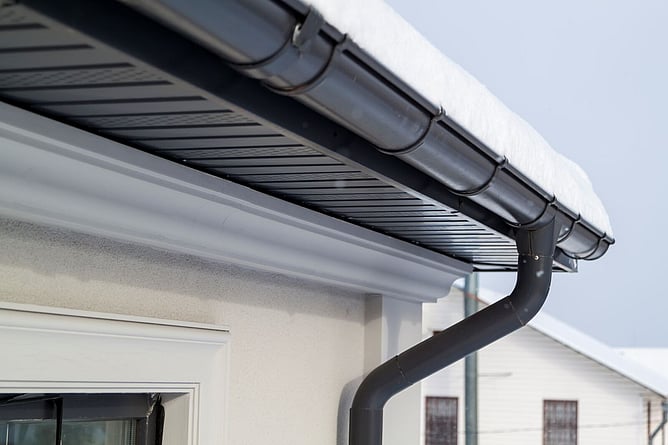
Gutters and spouting collect rainwater from the roof edge and direct it into downpipes, then away from the home. In New Zealand, many people use the words gutters and spouting in a similar way.
The important thing is that the system needs to collect water efficiently and move it away before it can cause damage.
Spouting problems can sometimes look like roofing problems. If spouting is blocked, sagging, undersized, poorly joined or installed with the wrong fall, water may overflow back toward the fascia, soffits, walls, foundations or roofline.
That can lead to staining, dampness, mould, timber damage and repeated water issues around the home.
At Flood Roofing, we work with spouting across Kerikeri and the Bay of Islands, and we often see how much difference a well-designed drainage system makes.
Flood Roofing’s gutters and spouting service focuses on replacing outdated and inefficient spouting with solutions that help protect homes from water damage.
A strong roof still needs effective water control at the edges. During heavy rain, the roof surface may be doing its job perfectly, but if the water has nowhere to go once it reaches the gutter line, the home can still be at risk.
How These Parts Work Together During Heavy Rain
During a downpour, rain hits the roof surface and begins moving down the roof. It travels over the sheets, past fixings, around penetrations, through valleys, away from ridges and into gutters or spouting. From there, it should flow into downpipes and be directed away from the building.
That journey only works properly when every part of the system is doing its job. A blocked valley can interrupt the flow. A failed flashing can let water in at a join. A loose fixing can create a small leak point.
A damaged penetration seal can allow water to track inside. Overflowing spouting can send water back toward areas that were never designed to handle it.
The New Zealand Metal Roofing Code of Practice explains roof drainage as the process of managing water from the time it hits the roof cladding through to gutters, valleys, internal gutters, external spouting and downpipes.
That is why we do not look at roofing problems in isolation. A leak inside the home may not be directly above the visible stain. Water can travel along framing, underlay or internal surfaces before it appears. Finding the cause means looking at the whole roof system, not just the most obvious spot.
What We Check During a Roof Inspection
When we inspect a roof, we look at how the full system is performing. We check the visible roof surface, but we also pay close attention to the smaller details that often cause problems.
We look at the roof sheets, coatings and general wear. We check for rust, damage, lifting, surface breakdown and signs that the roof may be reaching the end of its service life. We look at fixings to see whether they are secure, compatible and still sealing properly.
We also check flashings, valleys, ridges and penetrations because these are common leak points. If a roof has skylights, vents, flues or other openings, we look closely at how those areas have been detailed.
If there are valleys, wall junctions or changes in roof direction, we check whether water is being managed properly.
Finally, we look at gutters, spouting and drainage flow. A roof inspection is not complete if the water collection system is ignored. The roof needs to shed water, but the spouting needs to carry it away safely.
When Should You Call a Roofer?
It is worth getting roofing advice if you notice ceiling stains, damp patches, mould, rusty fixings, loose roof sections, overflowing spouting, sagging gutters, damaged flashings, debris build-up in valleys, or leaks after heavy rain.
You do not need to wait until water is actively dripping through the ceiling. Small roofing issues are usually easier to understand and manage when they are caught early. Sometimes the answer may be a simple repair or maintenance job.
Other times, the roof may need more significant work, especially if there is widespread rust, ageing materials or repeated leaks.
The most important thing is to get clear advice before the problem spreads. A roof protects the whole home, so even small weaknesses deserve attention.
Need Help Understanding Your Roof?
Roofing terms can sound technical, but the purpose of each part is simple. Fixings hold the roof in place. Flashings protect the joins. Underlay helps manage moisture beneath the surface.
Penetrations need careful weatherproofing. Valleys carry water from internal roof angles. Ridges protect the highest rooflines. Gutters and spouting collect rainwater and move it away from the home.
When those parts work together, your roof can protect your home properly. When one part starts to fail, it can affect the whole system.
If you are unsure what is happening on your roof, we can take a look and explain it in plain English. From fixings and flashings to gutters, spouting, valleys, ridges and full roof replacements, our team helps Kerikeri and Bay of Islands homeowners understand the condition of their roof and what to do next.
Talk to us now at Flood Roofing.
Phone: 0800 435 663
Email: office@floodroofing.co.nz