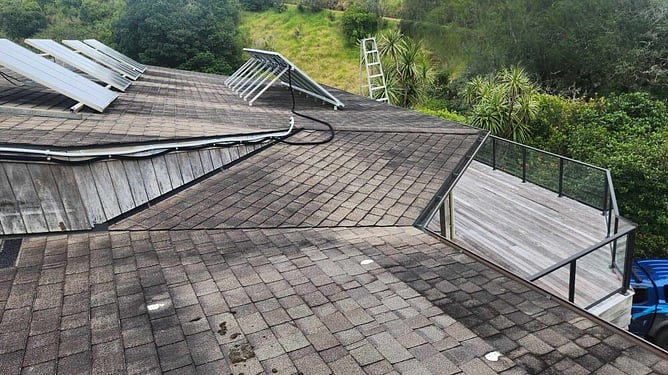
Spring is a good time to take stock of how your roof and gutters have handled the wetter winter months.
In Northland, roofing systems are exposed to heavy rain, strong sun, coastal air, wind, humidity and organic debris throughout the year. Those conditions can accelerate wear, particularly on older roofs or homes surrounded by mature trees.
A spring inspection does not need to mean climbing onto the roof. In fact, many useful warning signs can be spotted safely from ground level or from inside the house.
The goal is not simply to make the roof look tidy. It is to identify blocked drainage, early corrosion, leaks or other signs of deterioration before they turn into more expensive repairs.
What Winter Can Leave Behind on a Northland Roof
Winter weather can expose weaknesses that were not obvious during the drier months.
Repeated rainfall can reveal small leaks around flashings and roof penetrations, while damp conditions encourage moss, lichen and organic build-up. Leaves and twigs can accumulate in gutters, and salt carried inland from the coast can contribute to corrosion on exposed metal roofing and fixings.
Some of these issues are minor maintenance jobs. Others can be early signs that a roof or guttering system is beginning to fail.
Spring is therefore a useful time to look at the roof as a whole rather than waiting until the next heavy downpour reveals a problem inside.
Start With the Gutters and Roof Drainage
One of the simplest places to begin is with the guttering. A gutter full of leaves is easy to spot, but the more important question is whether rainwater can move freely through the entire drainage system.
From a safe position, look along the spouting for standing water, sagging sections, leaking joins or staining underneath the gutter line. Check whether downpipes appear blocked and whether water is being directed away from the building as intended.
If gutters repeatedly overflow even after they have been cleaned, there may be a problem with the condition, fall or capacity of the system rather than debris alone.
Homes surrounded by trees may also benefit from gutter guards or another form of gutter protection. These systems can reduce the amount of larger debris entering the gutter, but they do not make gutters completely maintenance-free. Fine material can still collect over time, and the guards themselves need to be checked occasionally.
If the existing spouting is rusted, leaking or pulling away from the fascia, installing gutter guards will not solve the underlying problem. In that situation, it may be worth speaking with a specialist in guttering in Northland about whether repairs or replacement are more appropriate.
Look Beyond the Gutters to the Condition of the Roof
Once the drainage system has been checked, look at the roof itself.
On metal roofs, pay particular attention to the edges, fixings, valleys and flashings. These are areas where deterioration may become visible before the larger roofing sheets appear obviously damaged.
A small isolated rust spot does not automatically mean a roof needs replacing. Localised corrosion may be repairable depending on its cause and the overall condition of the roofing system. Rust is more concerning when it appears around multiple fixings, roof edges or sections where coatings have started to break down.
Loose roofing sheets or damaged fixings should also be taken seriously. Strong winds and repeated weather exposure can gradually loosen components, increasing the chance of water entering during future storms.
Flashings around chimneys, vents, skylights, valleys and wall junctions are another common source of leaks. If there is staining inside the house but no obvious damage to the roofing sheets, one of these junctions may be responsible.
Moss And Lichen Can Tell You Something About Roof Conditions
Moss and lichen are common on roofs in damp or shaded parts of Northland.
Their presence does not necessarily mean the roof is failing, but heavy growth can trap moisture against roofing materials and make it harder to see what condition the surface underneath is in.
This is especially worth checking on areas of roof that receive limited sunlight or sit beneath overhanging trees.
Aggressive cleaning methods can damage protective coatings, so treatment should be approached carefully. If growth is widespread or the roof is already showing signs of deterioration, it is worth getting professional advice before attempting to remove it.
Do Not Forget Covered Outdoor Areas
Spring maintenance should not stop at the main house roof. Covered entertainment areas, patios, carports and outdoor kitchens may have separate roofing, guttering or roof junctions that are easy to overlook.
Pay particular attention to areas where an extension or patio roof meets the main house, as these junctions rely on correct flashing and drainage to remain weather-tight.
Properties with hot tubs or spas also benefit from regular checks around covered patio areas. These spaces already experience higher levels of moisture, so poor roof drainage or leaks overhead can add to dampness and water-management problems.
The same applies around swimming pools and covered poolside entertaining areas. Gutters and downpipes should direct rainwater away appropriately rather than allowing it to spill onto paving, pool surrounds or outdoor living spaces.
If you are planning or maintaining these areas, spring is a good opportunity to review whether the roof and drainage are still coping with the way the space is being used.
How to Tell if Your Roof Needs Replacing
One of the most useful things a spring inspection can reveal is whether maintenance is still enough or whether the roof may be approaching the end of its serviceable life.
A single loose fixing, isolated leak or small patch of rust does not necessarily mean you need a new roof. The bigger concern is when problems begin appearing across the roofing system.
Repeated leaks in different locations, corrosion, failing flashings and an increasing number of previous repairs can indicate that maintaining the existing roof is becoming less practical.
Signs worth having professionally assessed include widespread rust, recurring water entry, loose roofing across multiple sections, deterioration around several flashings and an older roof that now needs increasingly frequent repairs.
If you are trying to work out how to tell if your roof needs replacing, look for patterns rather than one isolated defect.
A professional inspection can help establish whether the issue can be repaired or whether reroofing would provide a more reliable long-term solution.
Check Inside the House as Well
The condition of the roof is not always obvious from outside. Take a look at ceilings and walls for signs of water entry, particularly after periods of heavy rain.
Brown or yellow staining, bubbling paint, mould, damp patches and musty smells can all indicate moisture getting into the building.
Water can travel along framing before becoming visible, so the stain inside is not always directly beneath the point where the roof is leaking.
Fresh staining should therefore be investigated rather than simply painted over.
When a Spring Check Should Become a Professional Inspection
There is plenty a homeowner can identify safely from ground level, but diagnosing the cause of a leak or assessing corrosion usually requires a closer look.
Experienced roofing contractors in Northland can determine whether a problem is routine maintenance, an isolated repair or evidence that the roof is approaching replacement.
It is particularly worth arranging an inspection if you notice repeated leaks, widespread rust, loose roofing, damaged flashings or guttering that continues to overflow despite being cleared.
Getting those issues checked in spring gives you more opportunity to organise repairs before the next period of heavy rain.
A Simple Spring Check Can Prevent Bigger Problems
Roof and gutter maintenance is easy to overlook when everything appears dry inside. But small drainage or roofing problems rarely improve on their own.
Taking a few minutes to check the condition of your gutters, downpipes, roofing, flashings and outdoor covered areas can help you catch problems early and avoid unexpected water damage later.
Flood Roofing works throughout Kerikeri, Paihia and the wider Bay of Islands, helping homeowners with roof repairs, reroofing, spouting and guttering.
If your spring inspection reveals leaks, corrosion, damaged gutters or other signs of deterioration, get in touch with Flood Roofing for practical advice on the next step.
Ph: 0800 435 663